Agentic AI delivers powerful business value but it also
introduces unpredictable behavior, nonlinear cost
growth, and performance risk that traditional FinOps,
monitoring, and capacity planning cannot control.
Agentic AI delivers powerful business value, but it also introduces unpredictable behavior, nonlinear cost growth, and performance risk that traditional FinOps, monitoring, and capacity planning cannot control. Organizations struggle to choose the right platform, size environments correctly, and avoid overspending while still meeting performance expectations.
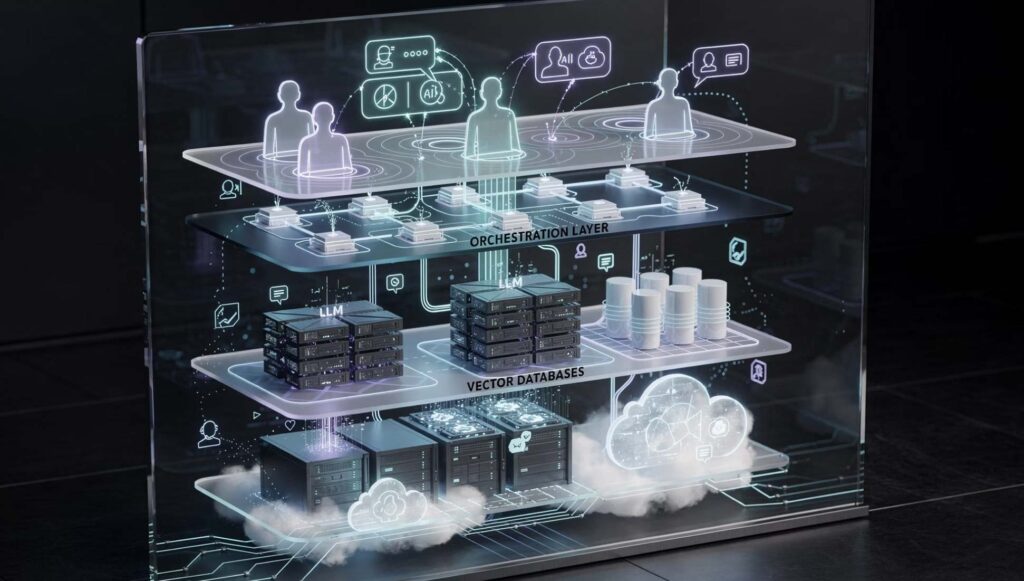
Agentic AI environments run across multiple complex layers agents, orchestration, LLMs, vector stores, data platforms, and hybrid multi-cloud infrastructure making unified visibility and proactive performance management extremely difficult.
Without the right approach, teams face:
Runaway cloud costs
Unpredictable spending that spirals out
of control
Inconsistent performance and SLG violations
Service level guarantees broken by
variable workloads
Overprovisioning "just to be safe"
Wasted resources from conservative
capacity planning
Slow incident resolution and unclear root causes
Complex systems make troubleshooting
difficult
Loss of financial and operational predictability
Unable to forecast costs or performance
reliably
Why Agentic AI Is Hard to Operate at Scale
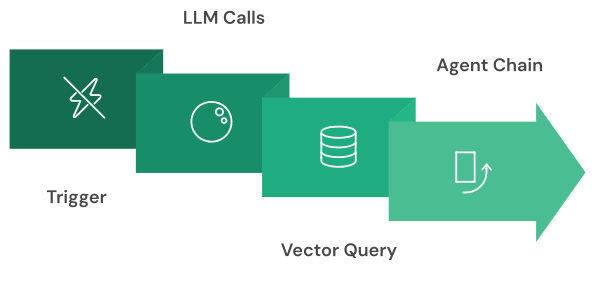
Unlike traditional applications, agentic AI systems are autonomous, dynamic, and workload-dependent. A single business process can generate multiple LLM calls, vector queries, retries, recursive chains, and agent-to-agent interactions making performance and cost extremely hard to predict and control.
Organizations face five fundamental challenges:
Platform & Budget Selection
Choosing the right platform and
configuration without guesswork or
overspending.
End-to-End Observability
Achieving unified visibility across agents,
orchestration, data platforms, and cloud
infrastructure.
Pre-Production Sizing
Accurately sizing agents and applications
before production to avoid financial and
performance surprises.
Dynamic Capacity Management
Adapting resources as workloads fluctuate across regions, platforms, and deployment models.
Continuous Cost and Performance Control
Preventing drift, degradation, and budget overruns as workloads evolve.
The central challenge is decision risk:
making high-impact planning and operational decisions without reliable, verifiable insight
into how agentic AI systems actually behave at scale.